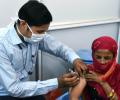
While some experts believe that a large part of India is still vulnerable to the virus that could trigger a third wave, others feel the country is not likely to be engulfed by another deadly wave unless a new variant emerges.
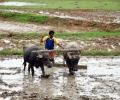
IMD has decided to increasingly use cutting-edge technology such as artificial intelligence (AI) and machine learning (ML) in forecasting, both to avoid such glitches and to counter the disruption of normal seasonal patterns as a result of climate change. It has formed various internal sub-groups of senior officials and meteorologists to decide on how best to use AI and ML in predicting cyclone intensity, and in making short-range weather forecasts (those valid for up to three hours) as well as long-range forecasts.
According to latest data, crops have been sown in around 72.13 million hectares, which is 8.90 per cent less than the same period last year.

The death of a 11-year-old boy due to 'bird-flu', even before the devastating effects of the second Covid wave have waned, has alarmed the medical fraternity though they assert that human-to-human transmission of H5N1 virus is extremely rare. The event has also put the Rs 90,000 crore domestic poultry industry which was seeing some uptick in demand after months of low sales last year into a spot of bother, as any curb on sale or production of eggs or chicken could have a devastating impact on its revenues. It is estimated that around 60 million people are directly impacted by the poultry sector in India. H5N1 virus, also commonly known as bird flu, is known to spread from chickens but other birds such as ducks and crow are also carriers of the virus.
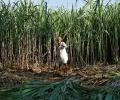
Sugarcane dues accruing to farmers rose to almost Rs 21,321 crore as of May 2021. Of that Rs 18,820 crore is for the cane supplied in the current season, which will end in September, while the remaining Rs 2,501 crore is from previous years. Of the pending sugarcane dues of 2020-21, almost 63 per cent accrues to the poll-bound state of Uttar Pradesh. The remaining are from Maharashtra and others.
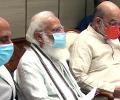
New ministry will bring much-needed transparency in the functioning of the cooperatives, which so far have been riddled with allegations of political interference and mismanagement.

'We have the technical expertise, and international collaborations. We also have robust real-time data. We are a university of pandemic management. If the ministry neglects the role of NCDC, it is the loss of the country'
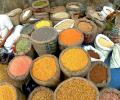
On a day when several mandis across the country are closed in protest against the recent Centre's decision to impose stringent stock-holding limit on pulses, the government clarified that limits have been defined as retail prices are still higher than last year though there is some moderation in the last few weeks. It said the same logic also holds true for edible oils, the import duties on which was slashed few days back and curbs lifted on import of refined oils. The decision on edible oil and pulses have caused massive resentment among the trading community as it came just ahead of the kharif sowing season, when prices were off their peaks due to multiple steps announced previously. Sources said trading activity in some of the major mandis dealing in pulses such as Sholapur, Amravati and Latur in Maharashtra, Indore and Dewas in Madhya Pradesh along with Kanpur in Uttar Pradesh was impacted as traders went on a flash strike in protest against the decision to impose stock limits.
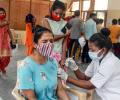
A June 11 survey by cLocalCircles across 299 districts puts overall vaccine hesitancy levels at 18 per cent, with 11 per cent of the respondents saying they were not convinced if the currently available vaccines would protect them against the new strains; and 5 per cent said they do not plan to take the vaccine at all.
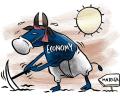
For the second month running, the demand for work under the flagship MGNREGA scheme has been lower than in 2020, which was an extraordinary year for the scheme. Latest data shows that around 35.1 million households have sought work under MGNREGA this June, or 21.48 per cent lower than the number that had sought work in the same month of 2020. This May, some 27.6 million households had sought work under the scheme, or 26.01 per cent lower than the same month last year.

865 million Indian adults require vaccination.

With rainfall and monsoons becoming highly unpredictable partly due to climate change and partly due to usual changes in weather patterns, it is such innovations by IMD which will help in planning better, reports Sanjeeb Mukherjee.

Easier dilution norms for mega initial public offerings (IPOs) have come into effect. Companies with post-listing market capitalisation (m-cap) of more than Rs 1 trillion will not be required to dilute a minimum of 10 per cent. The move to relax dilution norms is seen as a precursor to Life Insurance Corporation's IPO. The central government has said companies with an m-cap exceeding Rs 1 trillion will have to dilute Rs 5,000 crore and at least 5 per cent of their m-cap. Experts said the earlier framework discouraged large companies from listing since they were forced to offload a large volume of shares during the time of their IPO.
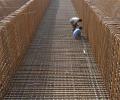
According to the latest report from Stranded Workers Action Network (SWAN), a voluntary effort started in March 2020 to mobilise relief for stranded migrant workers, almost 92 per cent workers, whom the group contacted between April 21 and May 31, had not received any money from their employer. This was after restrictions were imposed and work had stopped. The survey, which was conducted among 1,396 worker groups, adding up to 8,023 people that included 4,836 women and children, showed that 76 per cent of the workers had less than Rs 200 left with them.

As India looks to mend its Covid-battered economy, one thing that will grab the attention of all concerned is the path that both wholesale and retail inflation will follow. Even the Reserve Bank of India in its latest policy statement said, "Going forward, the inflation trajectory is likely to be shaped by uncertainties impinging on the upside and the downside.

A number of listed companies are not to be found on their registered address. The stock exchange has also been unable to contact them through other means. These 50 companies had been suspended for violations for more than six months. The BSE had reached out to them with show cause notices in December 2020.

According to medical practitioners, the treatment is especially useful in controlling disease among those who have not received the vaccine or got only one shot and also the high-risk contacts of a patient.
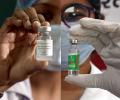
The study by a group of doctors showed that after two shots of the vaccines, 98 per cent recipients of Covishield showed antibody response, while the same was 80 per cent among Covaxin recipients. Sohini Das and Ruchika Chitravanshi report.

States should ensure a weekly positivity rate of less than 5 per cent, vaccination coverage of at least 70 per cent among the vulnerable section, and community ownership of Covid-appropriate behaviour, reports Ruchika Chitravanshi.
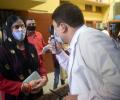
Hardly anyone wears a mask and most brush off concerns over a pandemic. It is not just scepticism over the existence of the pandemic. A common refrain across villages is the fear of vaccines, reports Ruchika Chitravanshi.
 © 2026 Rediff.com - Investor Information - Advertise with us - Disclaimer - Privacy Policy - Sitemap - Feedback - About us - Terms of use - Grievances